
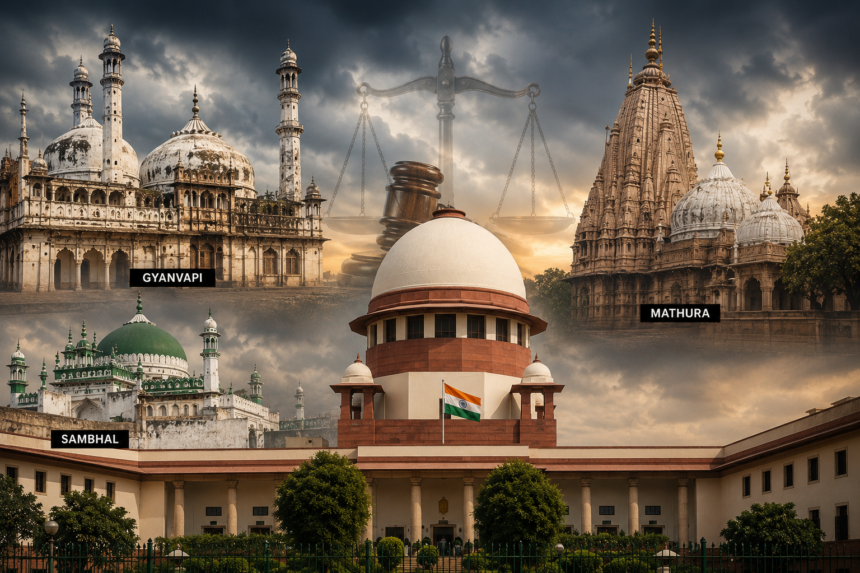
Hindu and Muslim parties in the Gyanvapi, Mathura, and Sambhal disputes have rejected the Supreme Court’s mediation proposal and want the cases decided on their legal merits.
The move shuts the door on settlement through the court’s Samadhan Samaroh 2026 initiative, which had invited parties to explore mediation before a special Lok Adalat. Both sides said the disputes involve title, constitutional questions, and issues of public importance that cannot be resolved through compromise.
For the Hindu litigants, the matters concern historical claims, worship rights, and the legal status of the sites. For the mosque committees, the position is that these disputes involve places of worship and competing claims that require judicial determination, not mediated settlement.
The three cases remain among the most sensitive and closely watched religious disputes in the country. Gyanvapi in Varanasi, Sri Krishna Janmabhoomi-Shahi Eidgah in Mathura, and Sambhal Jama Masjid each carry deep historical, legal, and social significance.
The Supreme Court’s mediation plan was meant to reduce litigation through consent-based resolution. But in these cases, both sides appear firmly committed to a court verdict instead.
The refusal means the disputes are likely to remain in the judicial arena, where larger questions about title, worship rights, and the Places of Worship Act continue to be examined.