

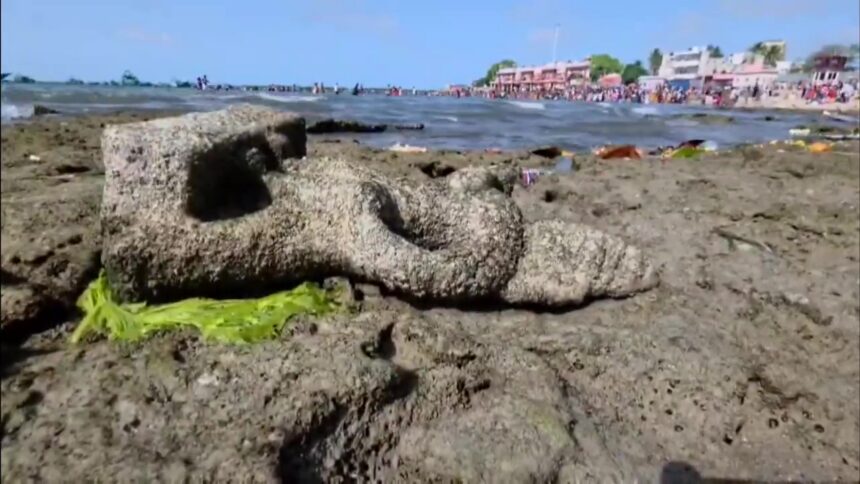
The sea has receded at Rameshwaram’s sacred Agni Theertham beach, revealing old murtis visible on the rocks, drawing attention from devotees and locals.
Agni Theertham is one of the most sacred seashores in Rameshwaram, located on the eastern beach directly opposite the famous Ramanathaswamy Temple. The beach is considered one of the 64 sacred theerthams (pilgrimage spots) in Rameshwaram and is where pilgrims take a holy dip before visiting the temple.
The receding sea has exposed ancient deity statues and rocks that were previously submerged. According to recent reports, “Shiva lingam and Nandhi found in Tamil Nadu’s Rameswaram” as the Agni Theertham sea water receded, with rocks and deity statues thrown into the sea becoming visible.
According to the Ramayana legend, Mata Sita took a bath here before worshipping Lord Shiva, and Agni Dev appeared at this spot to convince Bhagavan Shree Rama about Mata Sita’s purity. Bhagavan Shree Ram also bathed here to cleanse himself of the sins of battle after the war with Ravana.
Taking a holy dip in Agni Theertham is believed to wash away all sins. During Amavasya (new moon) and Poornima (full moon), thousands gather here to perform rituals for deceased ancestors.
The beach is open 24 hours, with spiritual activities highest during sunrise and special tithis. Mornings between 5:30 AM and 8:00 AM are best for a quiet experience.
This rare natural phenomenon of the sea receding and revealing ancient idols has sparked renewed interest in the sacred history of Rameshwaram.
Agni Theertham continues to be the primary pilgrimage destination for devotees visiting Ramanathaswamy Temple.
Follow Dharmic News for updates on sacred temples and Hindu pilgrimage sites.