
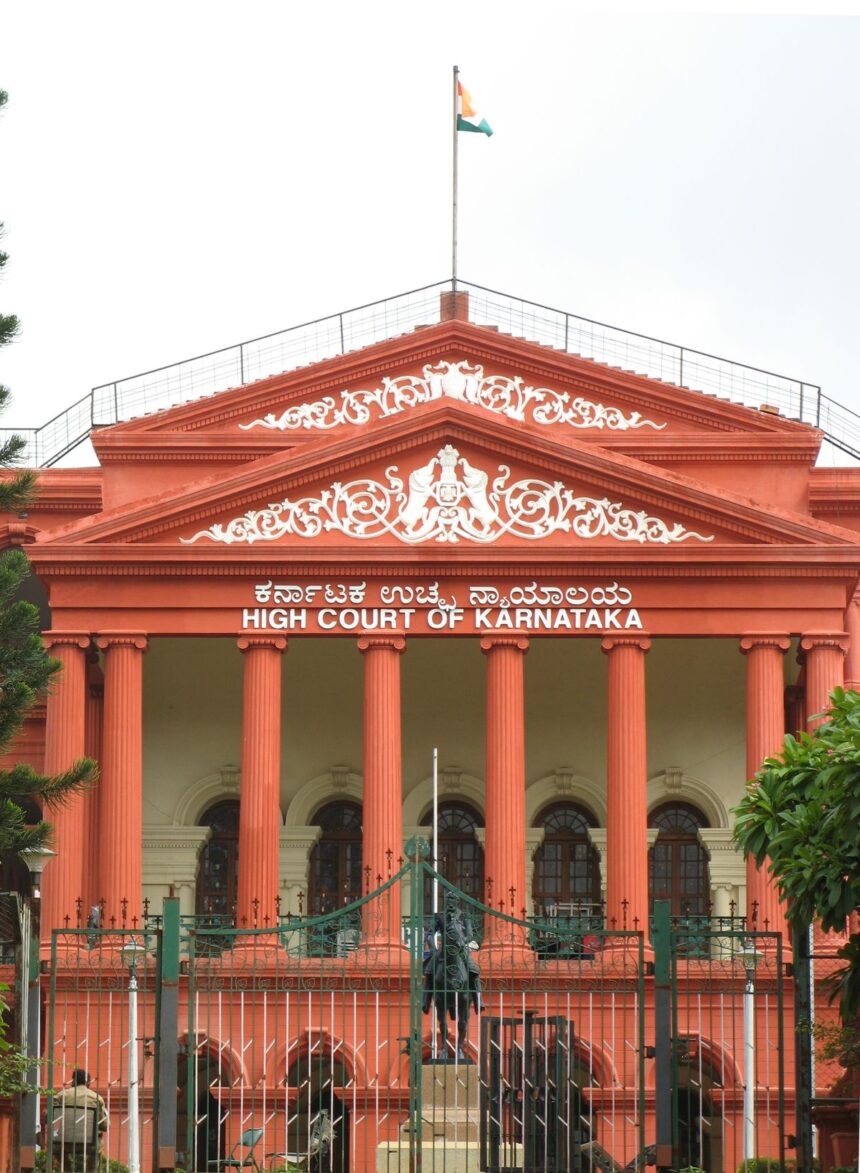
The Karnataka High Court has ruled that the biological father of a Hindu monk who had renounced worldly life cannot claim compensation as the monk’s legal representative following his death in a motor accident.
Justice Geetha KB observed while dismissing an appeal filed by the biological father of a Swamiji seeking the enhancement of motor accident compensation payable for the monk’s death in a bike accident. The Court held that the father was not the monk’s legal representative to pursue such claims, since the monk had renounced his biological family when he took up monkhood.
Rather, after his death, the monk’s legal representative would be his Math, the religious institution he headed. “Where a deceased had severed ties with his biological family upon entering religious circles, it can be presumed that the religious institution shall be the legal representative of the deceased. If the claim petition had been filed on behalf of the Math by its Administrative officer or any other responsible officer of the Math, definitely the claim petition would have been maintainable. However, in the present case, it is filed by the biological father. Hence, the claimant is not at all entitled to compensation,” the Court ruled.
The case concerned the death of Pirayogi Gulshannath Gurupeer Harinathji Maharaj, a Hindu monk who died in December 2009 after his motorcycle collided with a truck. The monk’s biological father later approached a Motor Accidents Claims Tribunal seeking compensation for the monk’s death. The claim was opposed by the insurer on the ground that the deceased had renounced worldly life, become a sanyasi and gone on to become the head of Kirawala Math.
The tribunal accepted this contention and refused to grant the monk’s father compensation under conventional heads such as loss of dependency. Instead, it awarded only ₹50,000 in compensation for loss of estate. The father challenged this ruling before the High Court and sought additional compensation.
The High Court upheld the tribunal’s order and dismissed the father’s appeal. “Once the person renounces the world and becomes Swamiji of the Math, then he severed his ties with his biological family. The Swamiji, by severing all his connections with his biological family, became Mathdeesha and accepted ascetic life. Thus, there is complete disassociation with his biological family in all respects,” the Court explained.
The Court highlighted that it was the monk’s Math that could pursue the compensation claim, since it depended on his labour and service. “He continued to serve the needs of Math and discharged managerial duties of Math. In such circumstances, the religious institution, being the recipient of the fruits of his labour and service, would stand in the position of legal representative and would be entitled to claim compensation,” the Court said.
When renunciation severs worldly ties, even grief must follow the dharma.