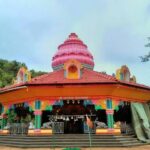

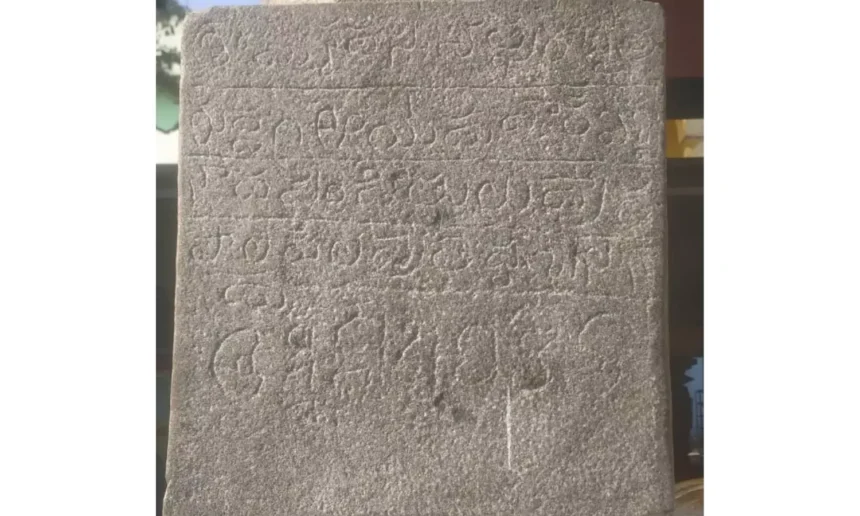
In Srikakulam, a small Shiva temple has quietly opened a powerful window into our shared civilisational past. At the Uma Lakhyeswara Swamy Temple in Gujaratipeta, epigraphist Bishnu Mohan Adhikari has discovered a rare inscription issued by a Brahmin donor named Biswanatha Pandita, dated to Chaitra Shukla Pratipada, on a Friday in the traditional Manmatha nama year. The donor describes himself as belonging to Palakunda, an older form of Palakula, linking the text to a particular historical landscape.
What makes this inscription extraordinary is its script. It features a unique blend of 14th-century Odia and Telugu elements, with the name Biswanatha Pandita clearly evident in both languages. This bilingual character reflects deep cultural and linguistic interaction between ancient Kalinga and the Andhra region, and strongly points to the imperial Eastern Ganga period, when Kalinga’s political and cultural influence extended into what is now Srikakulam. Earlier, at the same temple, Adhikari had deciphered the longest Odia inscription of the Kadamba kings, preserving the old name of Srikakulam as Sikakoli Gada.
These are not just letters on stone. They are proof that Odisha and North Andhra have long shared temple traditions, languages, and dharmic life. When such inscriptions are studied and preserved, forgotten unity returns to memory. Heritage is not created by politics. It is revealed by truth patiently carved in stone.