
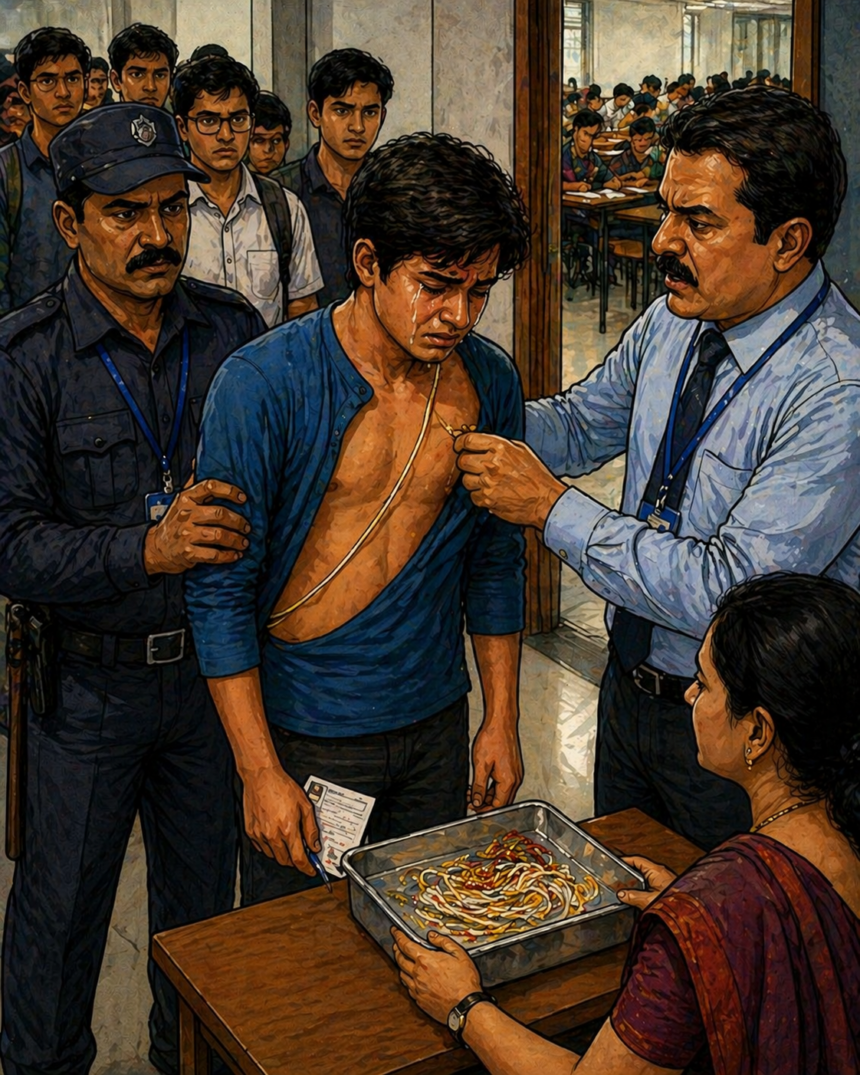
A fresh controversy has erupted in Bengaluru after students at a CET examination centre in Krupanidhi College, Madivala, were asked to remove their sacred thread, or Janeu, before entering the exam hall. Higher Education Minister Dr M. C. Sudhakar stated that this incident is deeply troubling because similar problems were reported last year, despite clear guidelines and the deployment of special officers to enforce dress‑code rules.
Sudhakar emphasised that no protocol in the CET guidelines requires the removal of religious symbols such as the Janeu and that such orders violate students’ human rights, privacy, and religious freedom. He described the demand to choose between faith and education as unacceptable. He said a complaint has been directed against the exam‑centre management, while the Deputy Commissioner has been asked to take strict action. The government is also reviewing legal provisions to ensure stronger enforcement so that Hindu religious practices are not targeted in future examinations.
One CET aspirant who appeared at Krupanidhi College said he reached the centre around 9:40 a.m., kept his bag in the room, and was then told he could not enter the hall because he was wearing the Janeu. He recounted that officials insisted he remove the sacred thread and implied he would be barred from taking the exam otherwise; around seven students were reportedly asked to do the same and had no option but to comply. The student added that he felt very sad and disturbed, which affected his ability to focus and write the CET properly.
This incident echoes similar cases during last year’s CET in Karnataka, where students in Shivamogga and Bidar were also asked to remove their Janeu, sparking protests, police complaints and suspensions of staff. Political and community leaders have called the repetition of such acts alarming and have demanded zero tolerance for any attempt to suppress Hindu religious identity at state‑run exam centres. The episode has intensified debate over how Karnataka’s examination authorities implement dress‑code orders without infringing on religious symbols protected under the Constitution.