
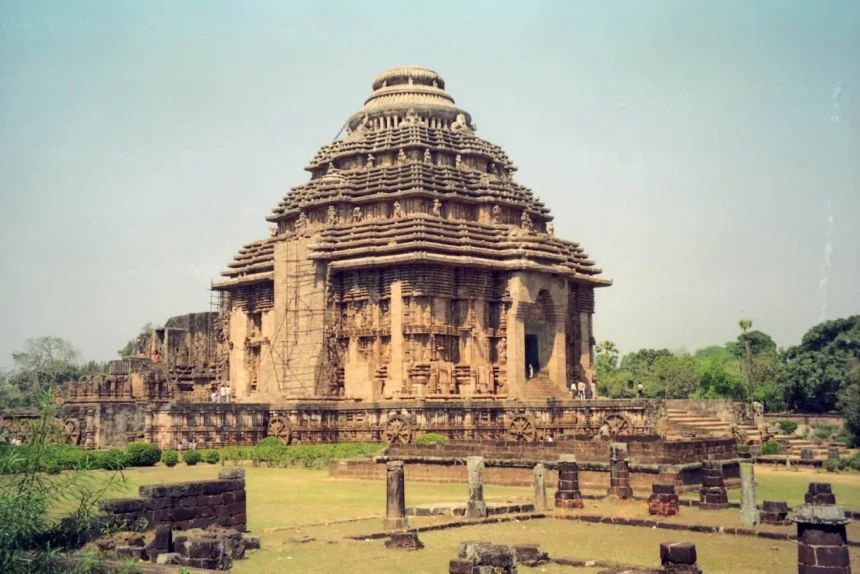
Archaeological Survey of India began removing century-old sand filling the Konark Sun Temple’s sealed sanctum sanctorum, enabling devotees access to the 13th-century vimana for the first time since British stabilization efforts.
A 30-member team employs zero-vibration diamond drilling 80 feet high within 127-foot Jagamohana, extracting core samples analyzed by IIT Madras, while 40 sensors monitor real-time structural shifts, preventing collapse during delicate operation.
British engineers packed the khondalite-laterite complex during 1903-04 repairs following partial roof failures documented by officer J.A. Bordian, preserving the UNESCO site’s integrity but denying exploration of Suryadeva’s inner sanctum, central tothe Eastern Ganga dynasty’s architectural zenith.
Three-month timeline prioritizes masonry reinforcement post-each extraction phase, addressing detected cracks, slopes, and settled fill, compromising 3.5 million annual visitors’ second-most visited ASI monument after the Taj Mahal.
Konark’s chariot-shaped silhouette symbolizing medieval Odisha’s naval supremacy emerges intact through modern conservation, marrying ancient stonecraft with digital precision, illuminating Kalinga stonemasons’ engineering transcending generations.
ASI’s Konark sand removal unlocks 13th-century sanctum after 122 years, deploying IIT Madras analysis and sensor technology to safely reveal Narasimhadeva I’s sun temple structural mysteries.