
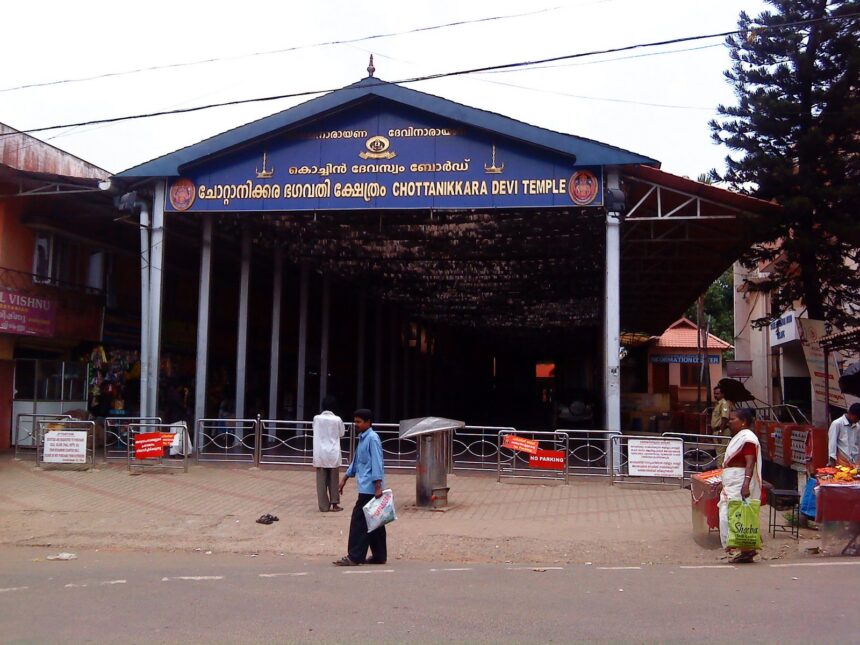
Kerala High Court has sharply criticised the state authorities and temple management over severe hygiene and sanitation failures at the Chottanikkara Bhagavathi Temple in Ernakulam. The court has treated the issue as serious maladministration in one of the Cochin Devaswom Board’s highest-revenue temples.
The Bench noted that the temple surroundings, including kitchen and adjoining areas, were filthy, unhygienic, and far below basic public health standards expected at a major place of worship. Inspection reports recorded rubbish accumulation near the incinerator and “Aanakottil” and leakage of dirty water into nearby areas and ponds, prompting a notice under the Kerala Public Health Act, 2023 to the Assistant Commissioner.
The court held that these conditions reflected systemic administrative failure by both the Temple Advisory Committee and the Devaswom Officers, and warned that it could pass adverse orders against them if urgent corrective steps were not taken. The State argued that Swachh Bharat Mission (Grameen) Phase II does not fund sewage treatment for institutional religious facilities, as its design is for local bodies and households. However, the court recorded that Suchitwa Mission has the necessary technical expertise and should guide remedial measures even if central scheme funding is unavailable.
The court directed the Executive Director of Suchitwa Mission to depute two senior officers to conduct a detailed cleanliness audit of the temple and propose concrete, permanent solutions for hygienic upkeep. Health Inspectors were allowed to continue inspections, and the case was posted for further monitoring on 17 December 2025, keeping pressure on authorities to deliver visible improvements.