
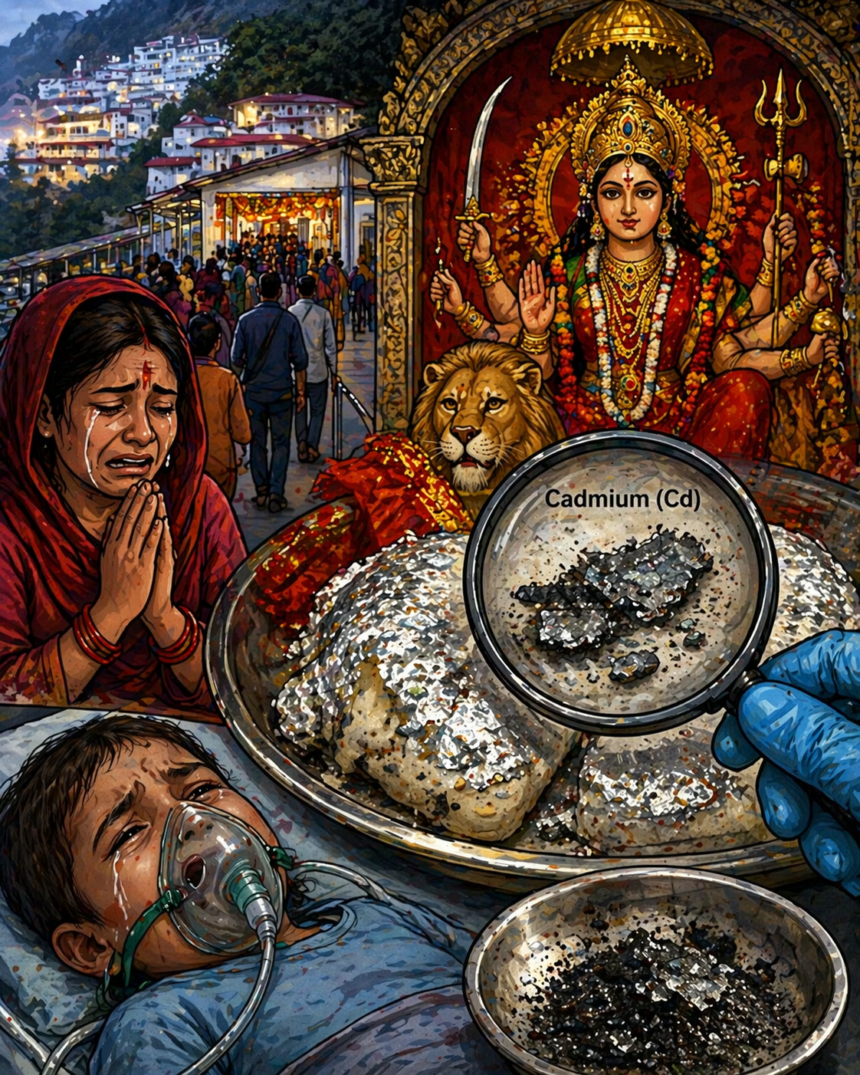
An investigation at the Shri Mata Vaishno Devi Shrine has revealed that a large share of so‑called “silver” offerings is not silver at all, but a mixture heavily adulterated with cheaper metals, including toxic cadmium. The Shri Mata Vaishno Devi Shrine Board had sent around 20 tonnes of accumulated silver offerings to a government mint, expecting to recover high‑value pure silver. Instead, tests showed that only about 5–6% of the metal was actual silver, with the rest being mostly iron and cadmium.
In one example, 70 kg of offerings yielded just 3 kg of real silver, slashing the expected value from what the shrine board hoped would be several hundred crores of rupees to only a fraction of that. Silver is currently worth hundreds of thousands of rupees per kilogram, whereas cadmium sells for just a few hundred rupees per kilogram, making the mix something like a 95% fake product dressed as devotional silver.
Devotees, believing they are making purely pious and valuable offerings, are effectively being sold heavily adulterated metal at shrine‑route vendors.
The discovery is not only about money. Cadmium is a toxic, carcinogenic metal strictly regulated under the Bureau of Indian Standards for use in consumer goods. When heated, such as during the melting and refining operations at the mint, cadmium releases dangerous fumes that can damage lungs, harm kidneys, and raise long‑term cancer risk.
Mint officials reportedly hesitated to process the material until they put in place special protective equipment and procedures to limit exposure. Workers handling such material face the highest occupational risk, and the environmental impact from air and water contamination is another serious concern.
The episode highlights a worrying gap between faith and verification at major pilgrimage sites. Authorities now face pressure to tighten checks on silver‑jewellery vendors near the Vaishno Devi route, to ensure that devotees are not misled about purity and that such toxic metals do not enter the religious‑economy‑plus‑health‑safety equation at one of India’s most revered shrines.