
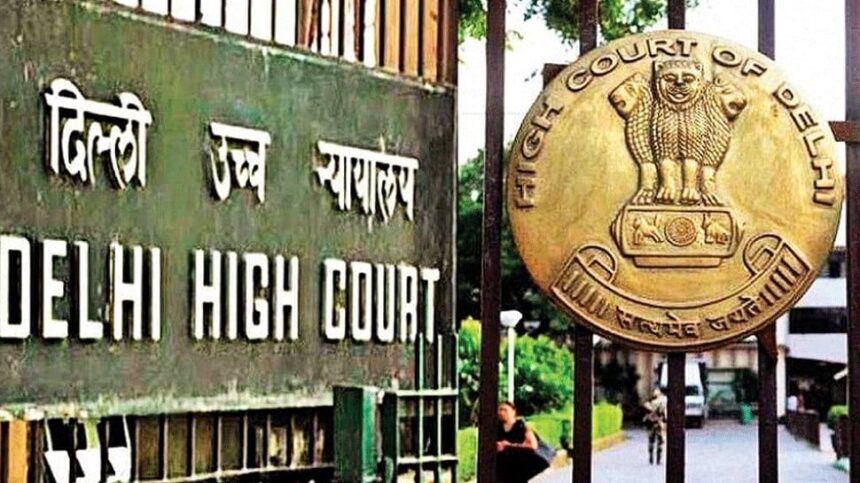
Delhi High Court rules customary divorce among Hindus requires strict evidence, not just witness statements. A Division Bench of Justices Anil Kshetarpal and Harish Vaidyanathan Shankar held that customs contrary to the Hindu Marriage Act cannot be established by a priori method or by examining a few witnesses. Once a court is called upon to recognize a custom contrary to codified law, the burden of proof is heavy on the party asserting it.
The court made these observations while dismissing an appeal by a woman whose second marriage was declared void. She claimed her first marriage ended through panchayati divorce prevalent in the Jat community. The family court initially accepted this custom, but the High Court found this erroneous. The woman failed to provide credible evidence such as historical records, community decisions, or judicial recognition proving long-standing customary practice. The only document produced was a photocopied divorce deed, which the court dismissed as a private settlement, not proof of custom.
The court emphasized that while Section 29(2) of the Hindu Marriage Act preserves rights recognized by custom to dissolve marriages, such customs are exceptions to general law and must be strictly pleaded and proved. Parties must produce judgments recognizing their custom, show past instances of customary divorce, or reference texts interpreting Hindu law. Customs cannot be extended by analogy. The second marriage was declared void.
This ruling protects the sanctity of Hindu marriage law. Customary practices cannot override codified law without solid proof. The court has upheld the integrity of the Hindu Marriage Act while acknowledging genuine customs backed by evidence.
Follow for more updates.