

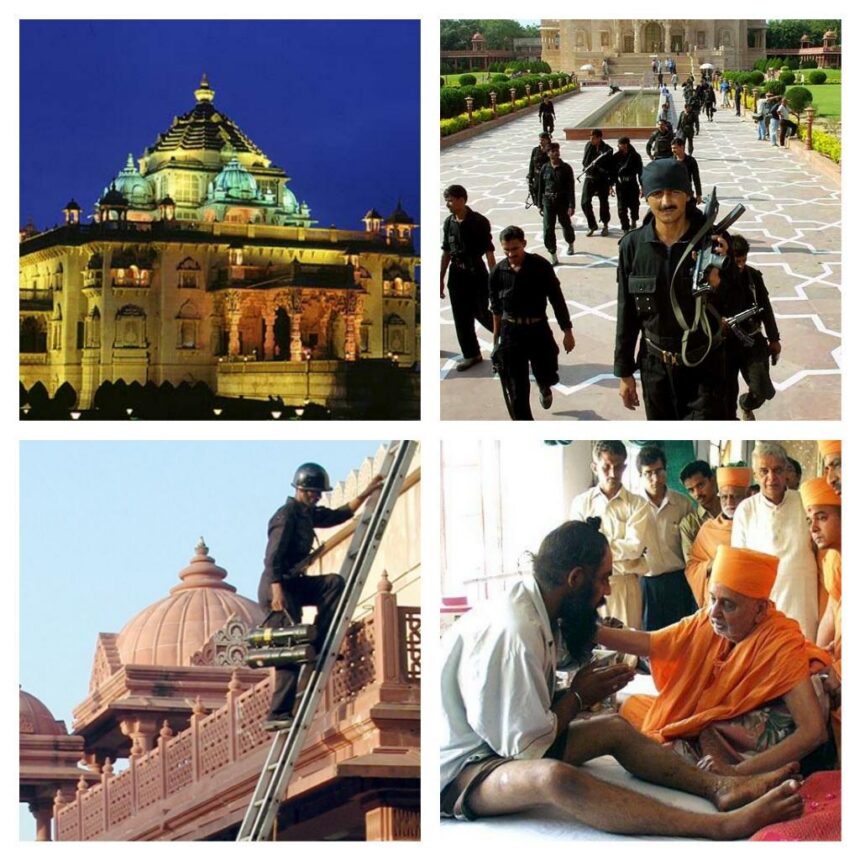
On September 24, 2002, terrorists attacked the Akshardham Temple in Gandhinagar, Gujarat, turning a sacred Hindu place of worship into the scene of a devastating terror attack.
The assault left 33 people dead and more than 85 injured, according to the Supreme Court’s later account of the case.
In 2010, the Gujarat High Court upheld death sentences for three accused: Adam Ajmeri, Shan Miya alias Chand Khan, and Mufti Abdul Qayyum Mansuri. Three others received prison sentences.
The High Court held that the attack was intended to spread terror among people and was linked by the prosecution to Pakistan-based terror groups. The judgment rejected the argument that the attack was simply an act of revenge for the 2002 Gujarat riots.
But the legal story did not end there.
In May 2014, the Supreme Court overturned the convictions and acquitted all six accused who had appealed. The Court found serious shortcomings in the investigation and concluded that the prosecution had failed to establish their guilt beyond reasonable doubt.
The Akshardham attack remains one of the darkest chapters in the history of modern Hindu temple security, reminding us of the devastating human cost of terrorism and the importance of both justice and due process.
Follow Dharmic News for more important updates.