

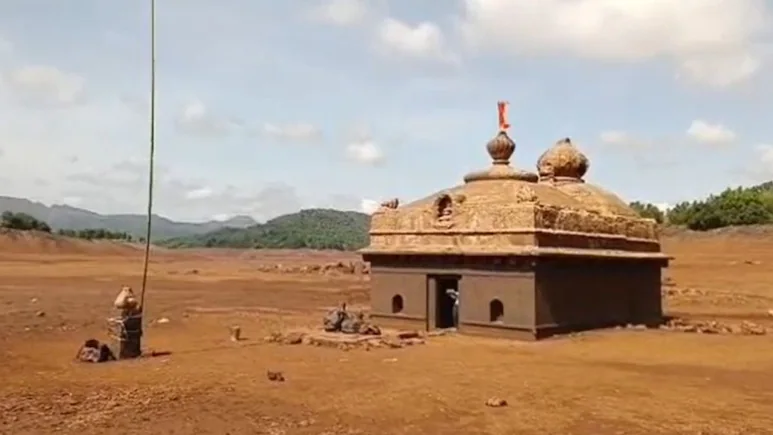
The ancient Kambareshwar Temple, believed to date back to the Pandava era of the Mahabharat, has emerged from the waters of the Bhatghar dam in Pune after the facility’s water level plummeted to just 6 per cent.
This remarkable temple, known for its resilient stone architecture and underwater Shiva lingam, is visible only during the last few days of May each year when the dam’s water recedes. For about 10 of the 12 months, the temple remains completely submerged, yet it still stands strong despite decades underwater.
The sanctum sanctorum is always filled with knee-deep water. The temple houses a self-manifested Shivalinga, a magnificent murti of Goddess Parvati, and Nandi Maharaja seated before her. Devotees dip their hands in this water and touch the temple murtis seeking Lord Shiva’s blessings.
Historians and locals believe the temple dates back to the Pandava era. Historical researchers, practitioners, and ordinary citizens flock to this ancient temple during this brief window.
The architecture astonishes even modern engineers. The temple’s spire and upper portion are constructed from limestone, sand, and baked bricks, while its sturdy walls are carved from heavy stones. Ancient rocks and “Veergals” (heroic saga stones) are visible right in front of the temple, further enhancing its historical significance.
Despite the dam’s surge causing some damage, its foundation and main structure remain as strong as they were centuries ago.
As soon as the monsoon arrives and the Bhatghar Dam fills with water again, the Kambareshwar Temple will once again be submerged for the next 10 months.
This unique confluence of nature, history, and faith continues to inspire millions who believe in Sanatan Dharma’s enduring legacy.
Follow Dharmic News for updates on ancient temples and Hindu heritage sites.