
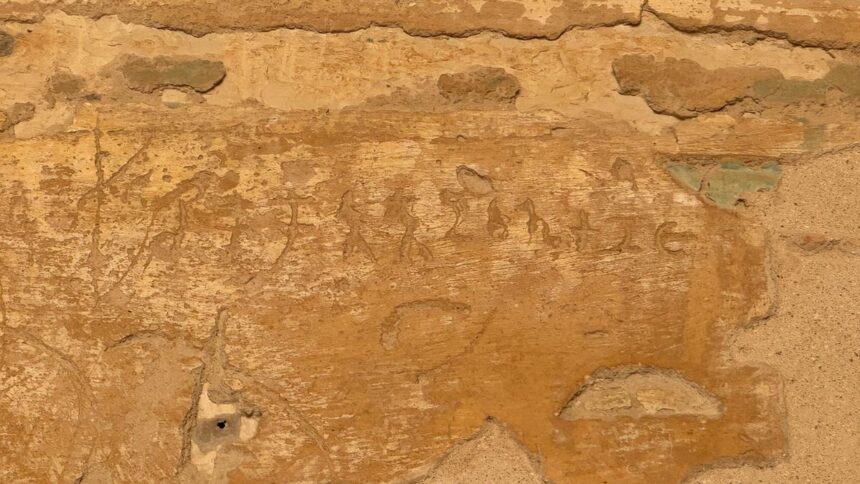
Scholars Charlotte Schmid and Ingo Strauch discovered nearly 30 Tamil Brahmi, Prakrit, and Sanskrit inscriptions inside six tombs at Egypt’s Valley of the Kings, dating to the 1st-3rd centuries CE. The graffiti, carved alongside 2,000 Greek marks documented by Jules Baillet in 1926, reveal ancient Tamil traders journeying deep into the Nile Valley beyond coastal ports.
The Tamil warrior name Cikai Koṟṟaṉ appears eight times across five tombs, often at entrances or at heights of four meters, with “Cikai Koṟṟaṉ vara kanta” mimicking the Greek “came and saw” formula. The name links to Sanskrit śikhā (tuft) and Tamil koṟṟam (victory), echoing Chera king Piṭṭāṅkoṟṟaṉ from Purananooru and Pugalur inscriptions.
Twenty Tamil Brahmi among the total 30 inscriptions confirm Tamilagam dominance, supplemented by a northwest Kshaharata envoy and western Prakrit marks indicating subcontinent-wide Roman trade participation.
The findings extend Tamil maritime presence from Berenike port to the Theban heartland, proving spice merchants accessed pharaoh’s necropolis alongside Mediterranean pilgrims during peak Indo-Roman commerce.
Tamil Nadu Archaeology’s K Rajan hailed the Valley of Kings discovery, extending Malabar-Roman links inland, with Cikai Koṟṟaṉ’s prolific graffiti confirming the Chera warrior class’s global footprint two millennia past.